
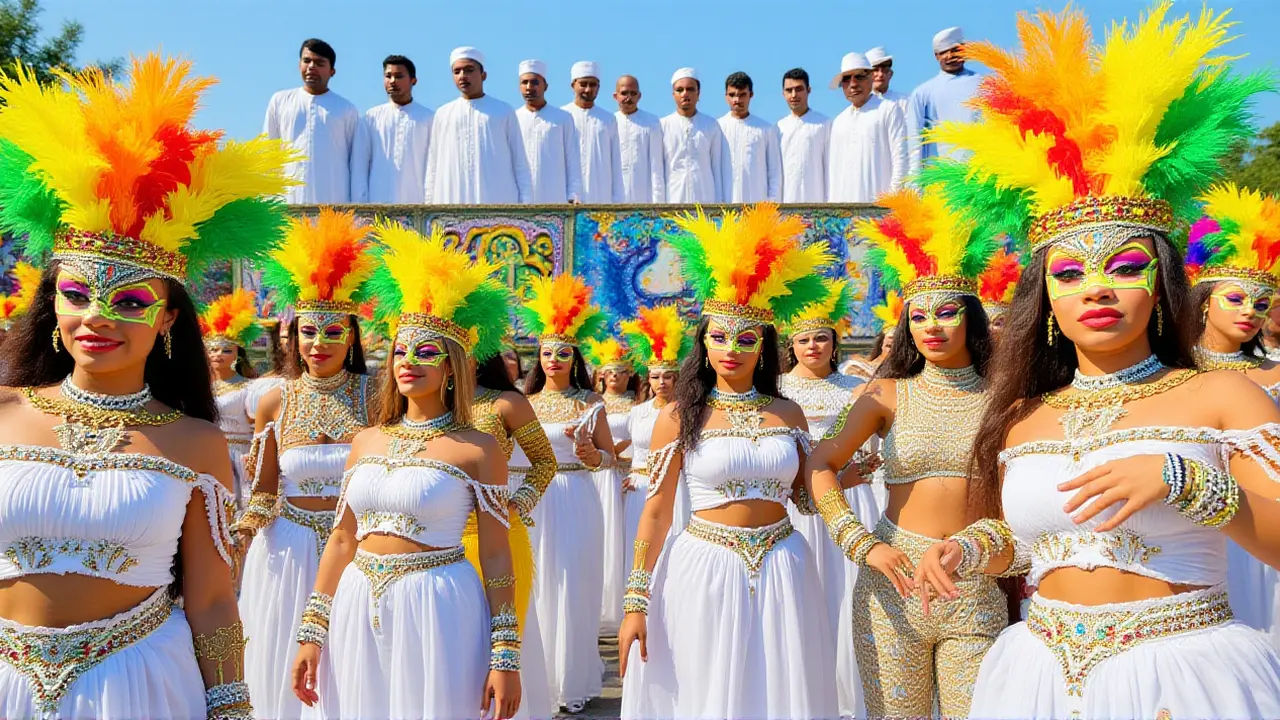
Thousands of revelers flooded the heart of Nigeria's commercial capital as the Lagos Fanti Carnival 2026 Tafawa Balewa Square exploded into a kaleidoscope of color, sound, and history on Monday, April 6. This massive street experience, widely regarded as the biggest of its kind in Africa, didn't just showcase dance and music; it served as a visceral reminder of the deep, enduring links between Nigeria and Brazil. From 10:00 am to 5:00 pm, the streets of Lagos Island became a living museum where ancestral pride met the energy of a modern megacity.
Here's the thing: this isn't just another parade. For those who live in Lagos, the carnival is a yearly reckoning with a complex past. It's a celebration of the "returnees"—freed slaves of Brazilian descent who brought back not only their families but also architectural styles, religious practices, and the rhythmic soul of the samba. By blending these historical roots with the grit and glamour of today's urban culture, the event transforms the city into a bridge across the Atlantic.
- Date: April 6, 2026
- Venue: Tafawa Balewa Square, Lagos Island
- Organized by: Lagos State Government
- Attendance: 6,147 registered participants and interested guests
- Heritage: Celebrating over 130 years of Afro-Brazilian influence
The Pulse of the Street: Parades and Processions
The atmosphere at the square was nothing short of electric. Imagine the roar of traditional drumming clashing with the syncopated beat of samba-inspired rhythms, all while performers in towering, elaborate costumes swept through the crowds. It was a visual feast of craftsmanship. The processions weren't just random marches; they were choreographed stories told through movement and melody.
Interestingly, the 2026 edition seemed to push the boundaries of production. Organizers from the Lagos State Government emphasized that each year the experience is scaled up. This year, the emphasis was on "retelling tradition through the eyes of the custodians." This meant more authentic regalia and a deeper focus on the ancestral pride that fuels the event.
The sounds were deafening in the best way possible. Live bands competed with the thunder of drums, creating a sonic landscape that felt both ancient and immediate. For a few hours, the hustle of Lagos traffic was replaced by the rhythmic sway of cultural troupes and the vivid colors of the Fanti legacy.
A Mosaic of Neighborhoods: The Community Groups
What makes the carnival truly special is its fragmented, community-led nature. It isn't one big show, but rather a collection of neighborhood identities. Each group represents a specific historical settlement on Lagos Island , each with its own colors and ancestral claims.
Take the Isale-Eko Woro Carnival Association , for example. They represent the very first settlement on the island, bringing a sense of primordial authority to the parade, specifically highlighting areas like Enu Owe and Idunganran. Then you have the Olowogbowo Fancy Carnival Association , whose legacy is tied to the Saro settlers who arrived from Portugal and Sierra Leone, adding a distinct layer of transatlantic history to the mix.
The Brazilian influence is most explicit in the Brazilian Campos Carreta Carnival Association . Their presence is a direct nod to the returnees who settled in the Carreña and Upper Campos areas. Similarly, the Epetedo United Youth Movement keeps the memory of King Kosoko's returnees alive, ensuring that the history of the Dumare and Petty streets isn't forgotten by the younger generation.
Rounding out the festivities were the Okoo-Faji and Okepopo Fanti Carnival Association , the latter of which focused heavily on the cultural markers of Okepopo Street. It's this granular level of detail—connecting a specific street corner to a global migration pattern—that gives the carnival its weight.
Why the Afro-Brazilian Connection Matters
To the casual observer, it's a party. But to the historian, it's a map of survival. The return of Afro-Brazilians to Lagos in the 19th century brought a unique architectural flair—the "Brazilian style" houses still visible on the island today—and a religious syncretism that blended West African beliefs with Catholicism.
Turns out, this cultural exchange created a unique class of educated, worldly citizens who helped shape the early modern identity of Lagos. By celebrating this 130-year legacy, the carnival validates the identity of thousands of Lagosians whose ancestors crossed the ocean twice—once in chains and once in freedom.
The ripple effects of such an event extend beyond the street. It boosts local tourism and provides a platform for artisans, fashion designers, and musicians to showcase their work. More importantly, it fosters a sense of continuity in a city that is changing at a dizzying pace.
The Road Ahead for the Fanti Legacy
What's next for the carnival? The growth trajectory is clear. With over 6,000 registered attendees for 2026, the event is outgrowing its current footprint. There are whispers among cultural observers that the carnival could evolve into a multi-day festival, potentially integrating more interactive workshops on Afro-Brazilian history.
But wait, there's a challenge: maintaining authenticity. As the event becomes a larger tourist draw, the risk is that it becomes a spectacle rather than a ceremony. The challenge for the custodians of culture will be to keep the "soul" of the Fanti traditions intact while welcoming the world.
Frequently Asked Questions
What is the historical significance of the Lagos Fanti Carnival?
The carnival celebrates the Afro-Brazilian returnees who came back to Lagos over 130 years ago. These individuals brought Brazilian cultural, architectural, and religious influences that blended with local Yoruba traditions, creating a unique heritage that is still preserved today on Lagos Island.
Who can attend the carnival and is there a cost?
The event is organized by the Lagos State Government as a free public celebration. Anyone can attend the parades and performances at Tafawa Balewa Square, making it an accessible cultural experience for both locals and international tourists.
Which specific areas of Lagos Island are represented in the carnival?
The carnival represents various historical settlements including Isale-Eko (Enu Owe, Idunganran), Olowogbowo (Elegbeta, Oke Arin), Brazilian Campos (Carreña, Ajele streets), and Epetedo (Dumare, Petty streets), among others.
How does the carnival differ from a standard street parade?
Unlike a standard parade, the Fanti Carnival is a living cultural legacy. It combines samba rhythms and Brazilian costumes with traditional Yoruba drumming and ancestral pride, specifically serving as a historical retelling of the diaspora's return to Africa.
When and where does the event typically take place?
The carnival takes place annually on April 6. The primary venue is Tafawa Balewa Square on Lagos Island, which serves as the central hub for the various community associations and their choreographed processions.
Comments
saravanan saran
It is fascinating how the movement of people across the Atlantic creates these cyclical patterns of identity. The way Lagos Island preserves this Brazilian essence feels like a living bridge between two continents, reminding us that home is often a collection of memories and rhythms rather than just a piece of land.
April 10, 2026 at 13:42
SAURABH PATHAK
Actually, if you look at the architectural records, the 'Brazilian style' houses aren't just about aesthetics, they were practical responses to the tropical climate of the 19th century. Most people just see the colors and miss the engineering logic behind the facades.
April 11, 2026 at 15:45
Anil Kapoor
Calling it a 'map of survival' is a bit melodramatic. It's a cultural festival. Let's not over-intellectualize a street parade into a sociological treatise on human endurance.
April 12, 2026 at 11:37
Senthilkumar Vedagiri
Sure, 'gov organized' yeah right. Bet there's some deeper agenda here to distract us from the real stuff happening in the city. Why this specific date tho? April 6 is too specific to be just a random Tuesday. Something fishy is going on with the way they track the 'registered guests' too... probably collecting data for some globalist launderng scheme lol
April 13, 2026 at 08:07
Dianna Knight
The intersectionality here is just stunning! 🌟 Seeing the syncretic blending of Yoruba cosmology and Brazilian Catholicism creates such a rich semiotic landscape for the community. It's an incredible example of cultural resilience and the beautiful fluidity of the African diaspora! ✨
April 14, 2026 at 20:53
Nikita Roy
this looks amazing
April 16, 2026 at 01:04
Kartik Shetty
the sheer lack of nuance in the common perception of the saro settlers is exhausting. most people fail to grasp the socioeconomic stratification that occurred upon their return. it is simply a matter of intellectual rigor
April 17, 2026 at 07:41
Jivika Mahal
I wish I could've been there to see the costuumes!! the way they connect specific street corners to global migration is just so cool. it makes history feel real for the kids who live there now and not just something in a dusty book
April 19, 2026 at 04:29
Gary Clement
The logistics of managing 6,000 people in Lagos Island must be a nightmare given the traffic. I wonder if they use a specific crowd-control system to keep the processions flowing without blocking the main arteries of the city
April 20, 2026 at 02:43
nikolai kingsley
absulutely ridiculous that we spent money on a parade when there are people starving. priorities are all wrong in this city. total waste of tax payer money honestly
April 21, 2026 at 14:42
vipul gangwar
I can see both sides. While some might see it as a waste, for others it's the only time they feel connected to their ancestors. It's a peaceful way to remember where we come from in a world that's moving way too fast.
April 21, 2026 at 21:51
shrishti bharuka
Oh sure, because spending tax money on a party is always the best way to 'preserve culture.' Truly a genius move by the government. I'm just so impressed by the logic here.
April 23, 2026 at 14:22
Antony Bachtiar
this is just a tourist trap now. the 'authenticity' part is a joke. once the govt gets involved everything becomes a sterilized version of what it used to be. its just for the gram at this point
April 23, 2026 at 20:32
Aaron X
The ontological framework of the 'returnee' identity suggests a liminal space where the subject is neither fully Brazilian nor fully Nigerian, but exists in a state of perpetual cultural synthesis. This phenomenological experience is mirrored in the polyrhythmic structures of the samba-infused drumming, which disrupts the linear perception of time and anchors the participant in a transcendental ancestral present.
April 25, 2026 at 01:45
Priya Menon
I must insist that we recognize the profound courage of those who navigated the Atlantic twice. It is an absolute travesty that some people here are attempting to diminish this celebration to a mere 'tourist trap.' The historical weight of the Afro-Brazilian returnees is non-negotiable and deserves the highest level of respect.
April 26, 2026 at 09:38
Arun Prasath
From a professional standpoint, the integration of community-led associations like the Isale-Eko Woro ensures a bottom-up approach to cultural preservation. This model is highly effective for maintaining authenticity while scaling the event for international visibility.
April 26, 2026 at 14:27
Anu Taneja
The mention of the youth movements is the most important part. If the younger generation doesn't take ownership, the traditions will fade regardless of how many tourists visit.
April 28, 2026 at 05:40
Sharath Narla
It's just a big circle of drumming and dancing, and we're all just pretending it's a deep spiritual journey while we sweat in the Lagos sun. But hey, it beats sitting at home, right?
April 28, 2026 at 12:07
Alex Green international
The emotional resonance of reclaiming one's heritage is a powerful catalyst for community healing. It is heartening to observe such a structured effort to honor the complexities of the diaspora's journey. I believe this fosters a necessary sense of belonging for many.
April 30, 2026 at 06:23
Mason Interactive
Man, I've seen a lot of festivals around the world, but the vibe in Lagos is just different. The way they blend those Brazilian roots with the local energy is a total win. Definitely adding this to the bucket list for the next trip.
April 30, 2026 at 09:54