
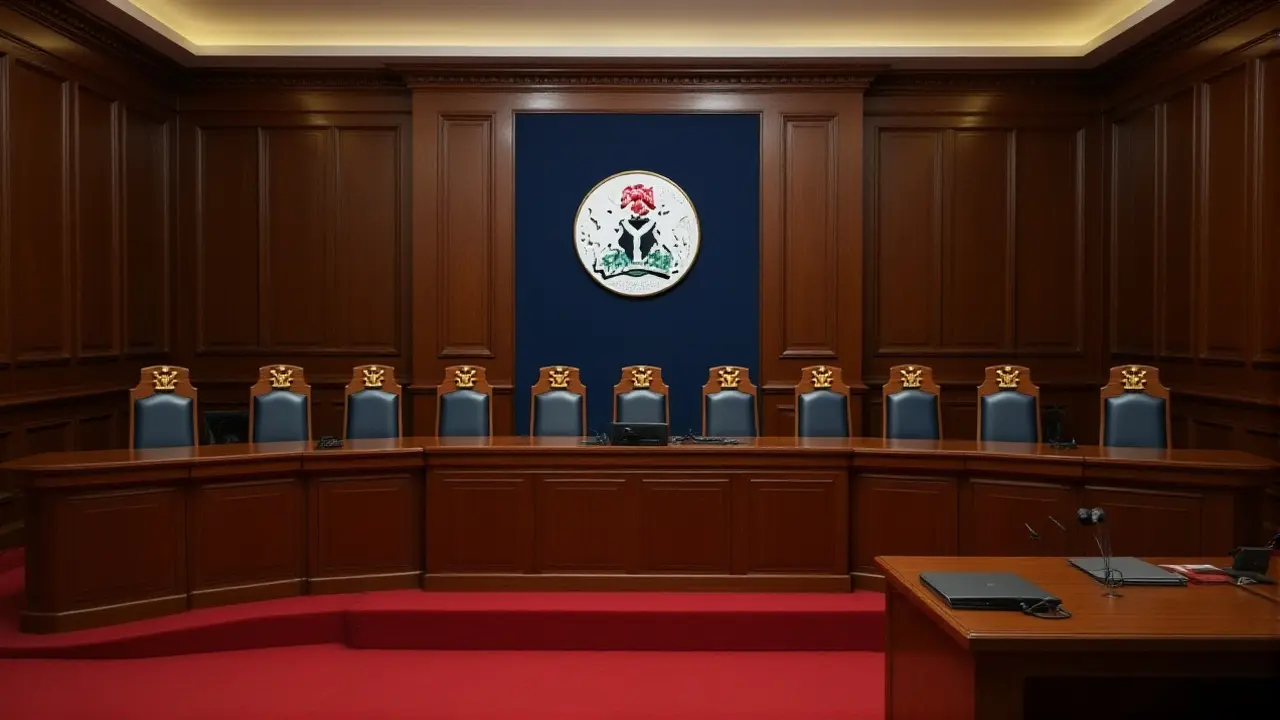
When The Supreme Court of Nigeria delivered its final judgment on the high-stakes commercial dispute involving Nestoil Limited and Neconde Energy Limited, it didn’t just settle a lawsuit. It drew a hard line in the sand for lenders across the country. Sitting in Abuja, the apex court overruled the Court of Appeal’s broader interpretation of a receiver’s powers, clarifying that secured creditors cannot simply hijack company management unless their contracts explicitly say so.
Here’s the thing: this isn’t just about two oil service companies fighting over control. It’s about how banks and financial institutions handle defaulting borrowers in Nigeria’s volatile energy sector. The ruling sends a clear message to every lender drafting a debenture right now—read your own fine print. If you want managerial control, you have to spell it out. You can’t rely on implied powers.
The Core Dispute: Who Really Runs the Show?
The legal tussle began when a secured creditor (whose identity remains undisclosed in public reports) appointed a receiver over assets linked to both Nestoil and Neconde. This move was triggered by a financing arrangement gone sour, leading to a clash over authority. The central question was simple but explosive: Does appointing a receiver automatically strip the existing board of directors of their power? Or is the receiver merely there to preserve and sell specific assets to repay the debt?
Initially, the Federal High Court took a cautious view. But then the Court of Appeal swung the pendulum the other way, granting the receiver expansive powers that effectively displaced the companies’ management. For Nestoil and Neconde, this felt like a hostile takeover disguised as debt recovery. They argued that such broad authority wasn’t supported by the Companies and Allied Matters Act (CAMA) or their specific security documents.
Turns out, they were right—at least according to the highest court in the land.
Supreme Court’s Verdict: Strict Interpretation Wins
In its decisive judgment, the Supreme Court allowed the appeal and overturned the Court of Appeal’s decision. The justices emphasized that a receiver’s powers are not infinite. They must be strictly derived from the terms of the debenture or security instrument and aligned with statutory provisions under CAMA.
“The appointment of a receiver does not automatically equate to the removal or displacement of the company’s existing management,” the court’s reasoning highlighted. Unless the contract uses clear, unambiguous language conferring managerial authority, the directors stay in charge. This reaffirms the orthodox legal position that a receiver acts primarily as an agent of the debenture holder, not as a wholesale replacement for corporate governance.
This distinction matters. In complex oil and gas projects, where operational continuity is critical, having a receiver suddenly step in without explicit contractual backing can cause chaos. The Supreme Court’s stance protects the stability of these enterprises while ensuring lenders still get paid—just not at the expense of arbitrary control.
Impact on Lenders and Borrowers
For banks and international financial institutions operating in Nigeria, this ruling is a wake-up call. Legal analysts describe it as a “landmark” decision because it narrows the scope of what receivers can do. Lenders will now need to revisit their security packages. Vague clauses won’t cut it anymore. If you want the right to appoint managers, fire directors, or halt operations, those powers must be explicitly written into the agreement.
On the flip side, corporate borrowers like Nestoil and Neconde have gained significant leverage. The judgment provides judicial support for their argument that boards cannot be easily displaced. This shifts the bargaining dynamic in future loan negotiations. Borrowers may insist on tighter restrictions on receivership powers, while lenders will push back with more precise, aggressive drafting to protect their interests.
It’s a classic case of contract law meeting real-world consequences. The details of the specific loan amounts or asset values involved in this case remain unclear, but the principle applies to billions of naira in secured lending across Nigeria’s economy.
What’s Next for Nigerian Commercial Law?
The ripple effects of this decision will be felt immediately in transactional structuring. Lawyers advising on project finance in the oil and gas sector will likely adopt stricter language in debentures. Expect to see more detailed schedules outlining exactly which operational decisions a receiver can make—and which they cannot.
Furthermore, this ruling aligns Nigerian jurisprudence closer to established common-law principles. It reinforces the idea that receivership is a remedial mechanism for debt recovery, not a tool for corporate restructuring beyond what parties agreed to. As disputes continue to arise in high-value financing transactions, courts will look to this precedent to resolve ambiguities.
While no immediate financial settlements or asset sales were reported following the judgment, the long-term impact is undeniable. Stakeholders in Nigeria’s financial and energy sectors will spend the coming months adjusting their strategies to fit this new legal reality.
Frequently Asked Questions
What did the Supreme Court decide in the Nestoil vs. Neconde case?
The Supreme Court of Nigeria overruled the Court of Appeal, ruling that a receiver’s powers are limited to what is expressly stated in the security instrument and relevant statutes like CAMA. The court clarified that appointing a receiver does not automatically remove existing company management unless the contract specifically grants such authority.
How does this affect banks and lenders in Nigeria?
Lenders must now ensure their debentures and security agreements contain explicit language if they intend to grant receivers managerial control. Vague or implied powers will no longer withstand judicial scrutiny, forcing banks to draft more precise contracts to protect their interests in case of borrower default.
Who are Nestoil Limited and Neconde Energy Limited?
Nestoil Limited is a Nigerian engineering and oil services company, while Neconde Energy Limited is an upstream oil and gas exploration and production firm. Both companies were involved in a financing arrangement that led to the appointment of a receiver, triggering this significant legal dispute over corporate control.
Can a receiver replace the board of directors?
Only if the security document explicitly allows it. The Supreme Court ruled that a receiver acts as an agent of the creditor and does not automatically displace the board of directors. Any transfer of managerial authority must be clearly defined in the contractual agreement between the lender and the borrower.
Why is this ruling considered a landmark decision?
This decision clarifies the boundaries of receivership law in Nigeria, balancing the rights of secured creditors with the stability of corporate governance. It sets a strict standard for interpreting security instruments, influencing how future loans and financing deals are structured in the country’s key economic sectors.
Comments
Pranav Gopal
This is actually a very significant development for corporate governance in emerging markets. It reinforces the principle that contractual clarity is paramount and prevents lenders from overreaching their authority under the guise of debt recovery.
June 5, 2026 at 22:08
harsh gupta
Oh, how quaint. The Supreme Court decides to play nice with borrowers while banks lose billions. This is exactly what happens when you let 'judicial activism' creep into commercial law. The elites are laughing all the way to the bank, but now they have to read the fine print themselves. Typical. :)
June 7, 2026 at 16:12
Manish gupta
Seriously? You think this helps anyone? It just makes lending harder and more expensive. Banks will tighten screws on everyone, not just the defaulters. Classic case of killing the golden goose because the lawyers got bored.
June 8, 2026 at 05:04
Sanjay Kumar
I see your point about the potential for tighter credit conditions, but there is also value in stability. If receivers could just walk in and fire boards at will, no one would invest in long-term projects like oil exploration. The balance needs to be right for sustainable growth.
June 8, 2026 at 18:11
Roop Kaur
The narrative here is heavily skewed towards protecting corporate entities from accountability. When a loan goes sour, it is rarely just bad luck; it is often mismanagement or fraud. By limiting the receiver's power, we are essentially shielding those who failed in their fiduciary duties. The system is rigged to protect the powerful few while the little guy pays the price through higher interest rates.
June 10, 2026 at 11:52
Mukesh Katira
In a sense, the moral imperative of justice requires that contracts be honored as written, not as interpreted by convenient judicial fiat. However, one must ask if the spirit of the law is being upheld when technicalities allow failing companies to continue operating under poor management simply because the paperwork wasn't perfect. It is a philosophical dilemma where legal precision clashes with practical ethics.
June 11, 2026 at 15:40
Siddharth SRS
It is profoundly disheartening to observe how such nuanced legal interpretations can inadvertently foster an environment where accountability is diluted, thereby potentially leading to a broader erosion of trust within the financial ecosystem, which is already fraught with challenges and uncertainties that require robust and transparent mechanisms to address effectively.
June 11, 2026 at 22:05
Ankita Bajaj
Let's look on the bright side! This ruling encourages better communication and clearer agreements between lenders and borrowers. It promotes a healthier business culture where expectations are set upfront. Everyone wins when things are clear!
June 12, 2026 at 17:09
Gaurav Jangid
Wow!! What a twist!!! The courts are basically saying 'read the contract'!! Which is ironic because most people don't!! So now banks will write even longer contracts!! It's a cycle!! But hey, at least Nestoil keeps its job!! Yay for bureaucracy!!
June 14, 2026 at 04:15
कमल कमल
Look, I don't care much for Nigerian law, but this kind of weak stance on creditor rights is exactly why capital flees developing nations. In India, we understand that discipline is key. If you borrow money, you follow the rules. These courts are coddling incompetent managers. It’s passive-aggressive nonsense disguised as justice. :) The West knows better, but these local courts are too busy playing politics with corporate assets.
June 15, 2026 at 04:31
Ghanshyam Gohel
While the intent may be to protect corporate stability, one must consider the aggressive implications for future lending practices. Lenders will undoubtedly respond with draconian clauses that leave borrowers with zero flexibility. It is a formal yet harsh reality that this decision might ultimately stifle innovation rather than protect it.
June 15, 2026 at 21:14